The story of AI infrastructure is usually told as an all-fiber story. In the racks that actually train the models, copper is busier than ever — pushed all the way to 800G for the shortest hops.
The short hop belongs to copper
Inside a rack and between adjacent racks, the dominant link is copper. It is lower latency, cheaper per port and far easier to service than fiber for 1–3 m jumps. For server-to-switch and switch-to-switch at arm's length, a copper patch is still the right tool.
800G copper assemblies arrived
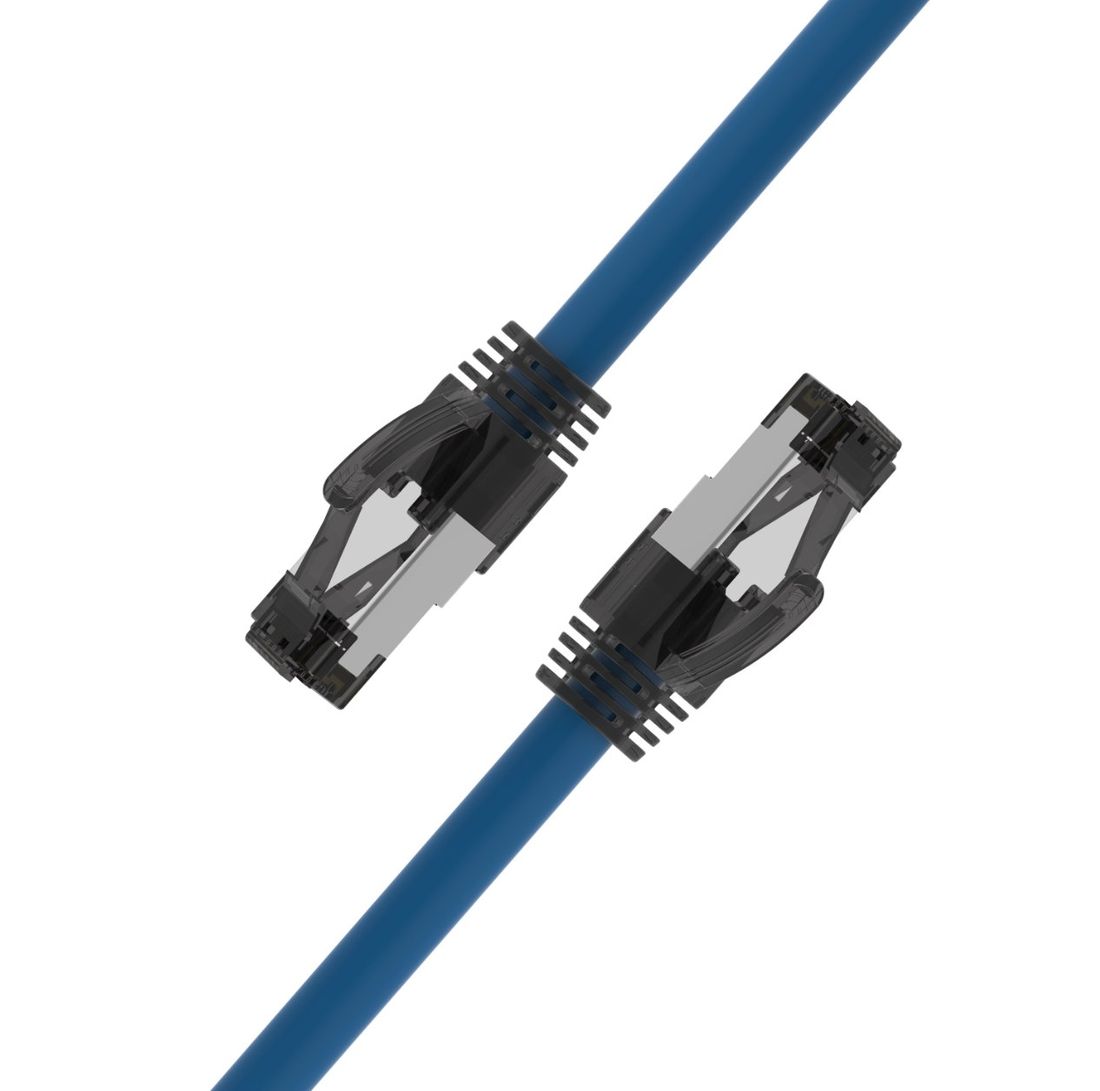
In December 2025 CommScope introduced 800G copper assemblies aimed at next-generation AI data centers. The move matters because it shows copper demand tracks fiber expansion, not replaces it: every AI cluster pulls through the whole channel — patching, interconnects and higher-grade copper — not just end devices.
Hybrid fabric is the design
The winning architecture is a mixed fabric: fiber backbone between closets and floors, copper for the horizontal and top-of-rack hops. Operators are explicitly designing around mixed-speed backbones rather than an all-fiber reset. Low-latency oxygen-free copper plus active optical cable (AOC) hybrid schemes are growing fast — one analyst pegs the hybrid segment at ~57% annual growth.
What it means for your spec
- 25G / 40G server links: Cat8 at up to 30 m — see the Cat8 S/FTP and Cat8 multi-angle.
- Beyond 30 m or 800G: step to copper components or fiber — Cat8's 30 m ceiling is a hard standard limit.
- Extend cleanly: the CAT.8 S/FTP 24 AWG Extension Cable keeps the rating across the hop.
Density and heat
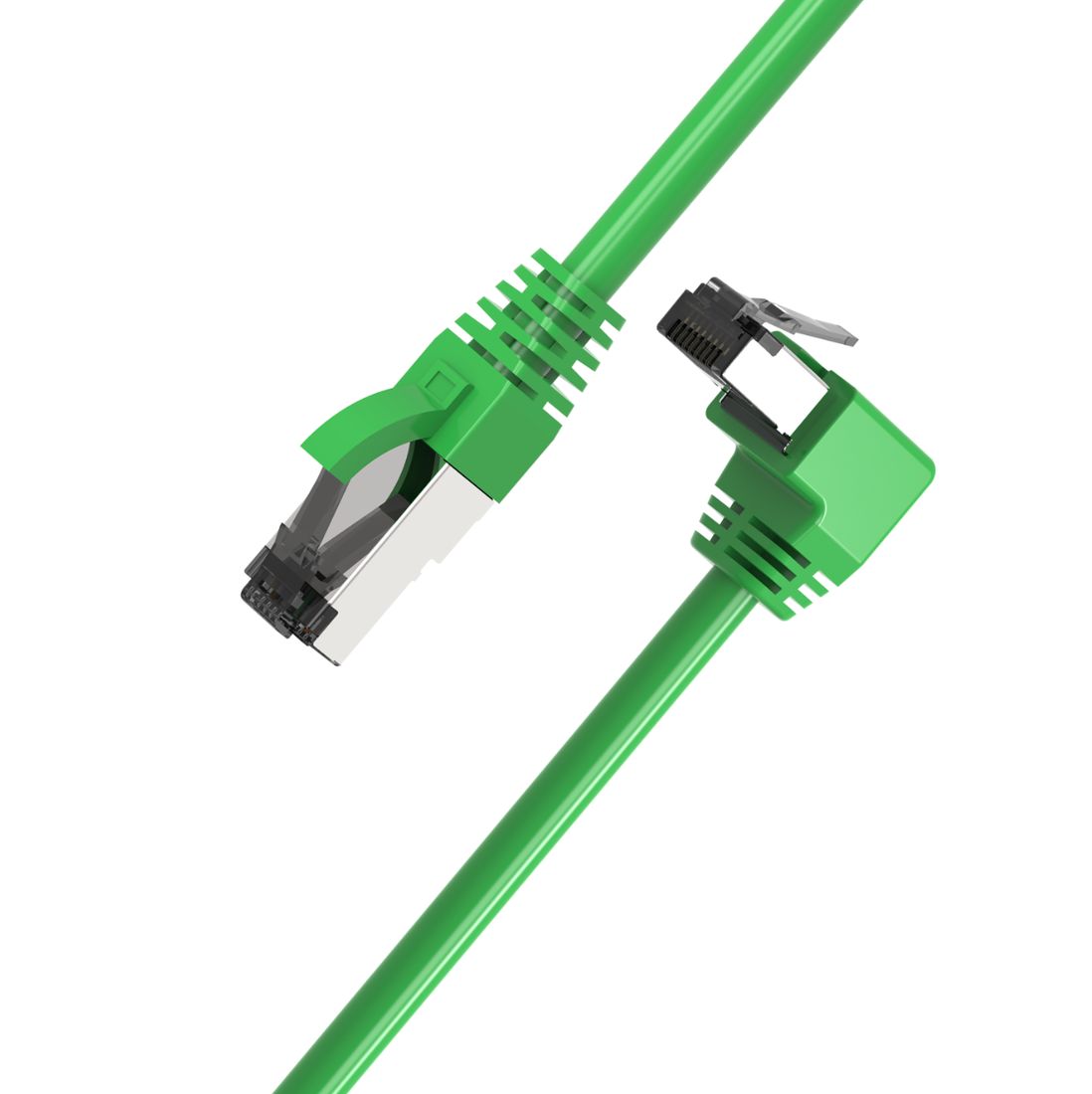
AI racks stack copper: the count of high-speed PAM4 cords per cabinet has more than doubled in two years. That density raises both strain and heat, so slim profiles and proper bend management stop being nice-to-have and become operational requirements.